Ales can be anything from creamy stouts to sweet porters hoppy and floral IPAs or dry and bitter sours. Ales and lagers are fermented with two different species of yeasts.
Dipaktharunepal Knowledge Of Difference Between Ale Beer Facebook
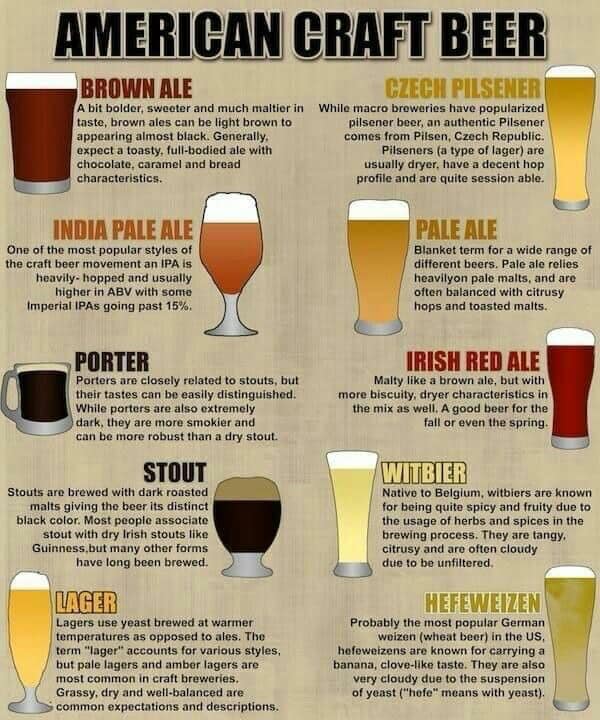
Lagers and ales are different varieties that fall under the larger beer umbrella.

Difference between ales and lagers. Experientially the difference between a lager and an ale can be explained with brands of beer everybody knows. These fast-moving yeasts are very active meaning that fermentation generally only take a few days as opposed to lagers which take longer explains Mack. Some are sweeter on.
American Lager Light. Mack explains that ales ferment with a top-fermenting strain of yeast and operate at room temperature. Difference between ale and lager is something everyone who drinks beer should pay attention to.
Lagers In Detail For the average beer drinker the difference between an ale and a lager comes down to how the beer looks smells and tastes. Overall ales will never imitate the smoothness of a lager. Ales are the older distinguished traditional brews of the world predating lagers by thousands of years whereas lagers are a relatively modern creation less than 200 years old.
Ales are brewed with top-fermenting actually ferments throughout the wort yeast which allows for rapid. Ales and Lagers the two terms or words which are common to some and not-so-common to others can be somewhat confusing when it comes to their actual difference. Ales are brewed with top-fermentation a much older style of brewing than the lager equivalent.
These smooth light and. Ales always lean towards more fruity scents and flavours. Ales also ferment at warmer temperatures 68 to 72 F or 20 to 22 C.
All the Differences You Need to Know. If one must point to a single differentiating factor between ales and lagers this is it. Ales tend to be fruity-estery while lagers are clean-tasting and frequently described as crisp But to a brewer the difference is more fundamental than that.
In a more general context ales and lagers are mostly defined by their look smell and taste. Simply put lagers are brewed using bottom-fermenting strains of yeast held at colder temperatures around 40-52F while ales are. Ales and lagers are each made using different strains of yeast.
Ales tend to leave more room for experimentation than lagers do and as a result there are far more styles of ales than lagers. Ales are usually described as robusty hearty and fruity. Lagers are the crisp thirst-quenching yellow beers like Budweiser and the like.
In fact IPAs are a subcategory of ales more on that later. This means that the yeast ferments at the bottom of the fermentation container. Ales are fermented with top-fermenting yeast at warm temperatures 6070F and lagers are fermented with bottom-fermenting yeast at cold temperatures 3550F.
The basic difference between these two major beer classifications is how they are fermented. While lagers are defined as crips and clean-tasting. Lagers are characteristically smooth elegant.
The biggest difference between ales and lagers comes down to the yeast used. Since yeast ferments faster in a warmer environment most ales dont take as long to complete the brewing process as lagers do. Ale vs Lager vs Pilsner.
Lager is generally lightly colored with a clean fruity and slightly hoppy aroma coupled with pleasant malt flavors. Ales include everything with ale. Lagers by comparison are the workhorses of the beer world.
Ales are fermented using strains of Saccharomyces cerevisiae and lagers are fermented using Saccharomyces pastorianus. The distinguishing factor between the different types is how they are brewed which affects the look and taste. There are three main difference between lager and ale and thats temperature time and yeast.
At this point in time the main distinguishing factor between ales and lagers is their yeast and thus fermentation method. The difference is the type of yeast used in the fermentation during the brewing process. The fermentation process occurs near the end of the brewing process after the barley has been malted mashed and has hops added.
Opposite of ales which use top-fermenting yeast and are brewed at warmer temperatures lagers are brewed at a cooler temperature with bottom-fermenting yeasts.