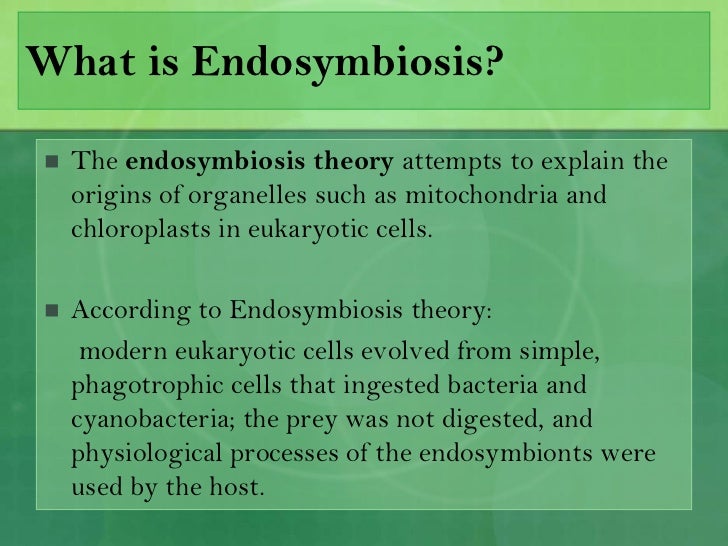
Chloroplasts and possibly other organelles of eukaryotic cells originate through symbiosis between multiple micro-organisms. In endosymbiotic theory consistent with general evolutionary theory all organisms arose from a single common ancestor.
Endosymbiosis Cyanobacteria
The mitochondrion was originally a prokaryotic cell that could undergo aerobic respiration.
Define and explain the endosymbiotic theory. A theory stating that the eukaryotes evolved through a process whereby different types of free-living prokaryotes became incorporated inside larger prokaryotic cells and eventually developed into mitochondria chloroplasts and possibly other organelles. The endosymbiotic theory states that some of the organelles in eukaryotic cells were once prokaryotic microbes. Mitochondria and chloroplasts have their own ribosomes which have 30S and 50S subunits not 40S and 60S.
The endosymbiotic theory explains the evolution of mitochondria and chloroplasts. The endosymbiotic theory suggests an origin of organelles. In endosymbiotic theory consistent with general evolution ary theory all organisms arose from a single common ancestor.
Mitochondria and chloroplasts are the same size as prokaryotic cells and divide by binary fission. Before mitochondria and chloroplasts were organelles in a cell they were free prokaryotic cells that were absorbed by eukaryotic cells. The theory suggests that organelles came about through endocytosis between prokaryotic cells.
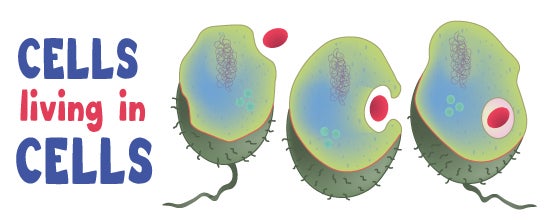
Mitochondria and chloroplastsThe theory proposes that these organelles evolved from certain types of bacteria that eukaryotic cells engulfed through phagocytosisThese cells and the bacteria trapped inside them entered an endosymbiotic relationship meaning that the bacteria took up residence. The prokaryotes may initially have been parasites or even an intended meal for the larger cell somehow escaping digestion. The theory of endosymbiosis is the concept that mitochondria and chloroplasts are the result of years of evolution initiated by the endocytosis of bacteria and blue-green algae which instead of becoming digested became symbiotic.
Endosymbiotic theory tries to explicate about the origins of cell organelles of eukaryotes such as mitochondria and chloroplasts. Endosymbiotic theory proposes that these organelles were once prokaryotic cells living inside larger host cells. Symbiosis is a close relationship between two different organisms.
En The endosymbiotic theory explains the origin of mitochondria and plastids including chloroplasts which are organelles of eukaryotic cells as the incorporation of an ancient prokaryotic cell into ancient eukaryotic cell. Endosymbiont theory was originally put forward by biologist L. Margulis in the 1960s.
The endosymbiotic theory is the accepted mechanism for how eukaryotic cells evolved from prokaryotic cells. Eukaryotic cells contain specialized subunits called organelles which is the main characteristic which differentiates eukaryotic and prokaryotic cells because prokaryotic cells do not have organelles. Symbiogenesis explains the origins of eukaryotes whose cells contain two major kinds of organelle.
A theory stating that the eukaryotes evolved through a process whereby different types of free-living prokaryotes became incorporated inside larger prokaryotic cells and eventually developed into mitochondria chloroplasts and possibly other organelles. Mitochondria and chloroplasts have their own DNA which is circular not linear. Mitochondria is usually well thought-out to have arisen from proteobacteria orderRickettsiales by endosymbiosis.
According to this theory certain organelles originated as free-living bacteria that were taken inside another cell as endosymbionts. However scientists are still actively debating whether or not these structures evolved through endosymbiosis. American Heritage Dictionary of the English Language Fifth Edition.
The endosymbiotic theory argues that mitochondria plastids eg. The endosymbiosis theory explains how eukaryotic cells may have evolved from prokaryotic cells. The theory holds that mitochondria plastids such as chloroplasts and possibly other organelles of eukaryotic cells are descended from formerly free-living prokaryotes more closely related to bacteria than archaea taken one inside the other in endosymbiosis.
A theory stating that the eukaryotes evolved through a process whereby different types of free-living prokaryotes became incorporated inside larger prokaryotic cells and eventually developed into mitochondria chloroplasts and possibly other organelles. Symbiogenesis or endosymbiotic theory is the leading evolutionary theory of the origin of eukaryotic cells from prokaryotic organisms. It involves a cooperative relationship between two cells which allow both to surviveand eventually led to the development of all life on Earth.
Endosymbiotic theory is the unified and widely accepted theory of how organelles arose in organism s differing prokaryotic organisms from eukaryotic organisms. Endosymbiotic origins have been suggested for many structures including flagella structures like the tail of a sperm cilia hair-like structures that help in locomotion and even the nucleus the cells command center. Endosymbiotic theory is the unified and widely accepted theory of how organelles arose in organisms differing prokaryotic organisms from eukaryotic organisms.